WayLeaf
Eco-Sustainability & Wellness Habit App
Role:
UX/UI Designer, Research & Strategy
Timeline:
10 weeks
Platform:
Mobile (Android, IOS)
Tools:
Lovable, Uizard, Figma, Airtable, Supabase, Prototyping, Usability Testing
Overview
Wayleaf is a wellness-inspired eco-sustainability app that helps individuals and organizations build consistent, meaningful eco-friendly habits. Instead of overwhelming users with carbon data or guilt-driven messaging, Wayleaf focuses on small daily actions, clear impact visualization, and positive reinforcement through community and gamification.
The experience transforms sustainability from an abstract concept into a daily, motivating practice by showing how small choices add up — both individually and collectively.
Problem
Many people want to live more sustainably, but existing tools often feel:
overly technical or data-heavy
disconnected from everyday routines
guilt-driven rather than motivating
Carbon metrics can feel abstract, making it difficult for users to understand whether their actions actually matter. Without visible progress, personalization, or community reinforcement, motivation quickly fades.
Key challenge:
How might we make sustainability feel approachable, motivating, and rewarding, rather than overwhelming or discouraging?
Goals
Make sustainability feel manageable through small, daily actions
Visualize real-world environmental impact in relatable terms
Encourage long-term consistency through gamification
Support both individual users and organizations
Foster motivation through community and shared progress
Research & Discovery
Research explored how behavior change, motivation, and visibility influence sustainable habits, shaping a system that encourages consistent, meaningful action.
Methods
Persona-driven research across individual and organizational users
Behavioral research on motivation, habits, and gamification
→
Competitive analysis of sustainability and habit-tracking apps
→
Systems mapping to understand data relationships and scalability
→
Insights
Users are more consistent when given one simple action at a time
1
Gamification (streaks, badges, challenges) increases engagement
2
Community and recognition reduce guilt and increase motivation
3
Users struggle when progress feels abstract or invisible
4
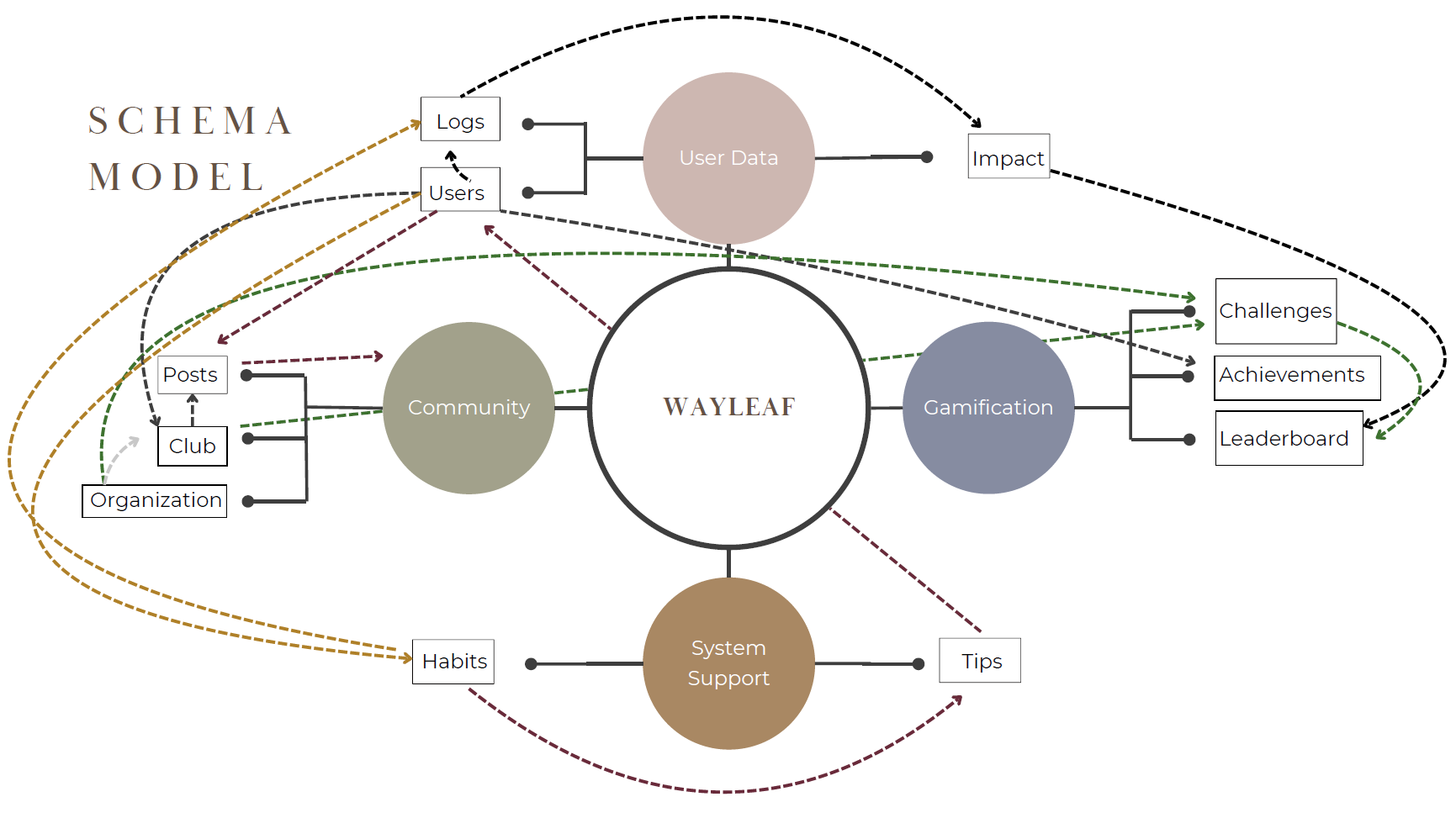
The system architecture maps how habits, logs, and impact data connect to create a feedback loop that reinforces sustainable behavior.
User Needs
Individuals
Simple, high-impact habits
Clear progress and encouragement
Non-judgmental tone
Visual feedback that feels rewarding
Organizations
Easy-to-launch sustainability initiatives
Team-based challenges and reporting
Clear, credible impact metrics
Engagement tools that feel positive, not forced
Design Strategy
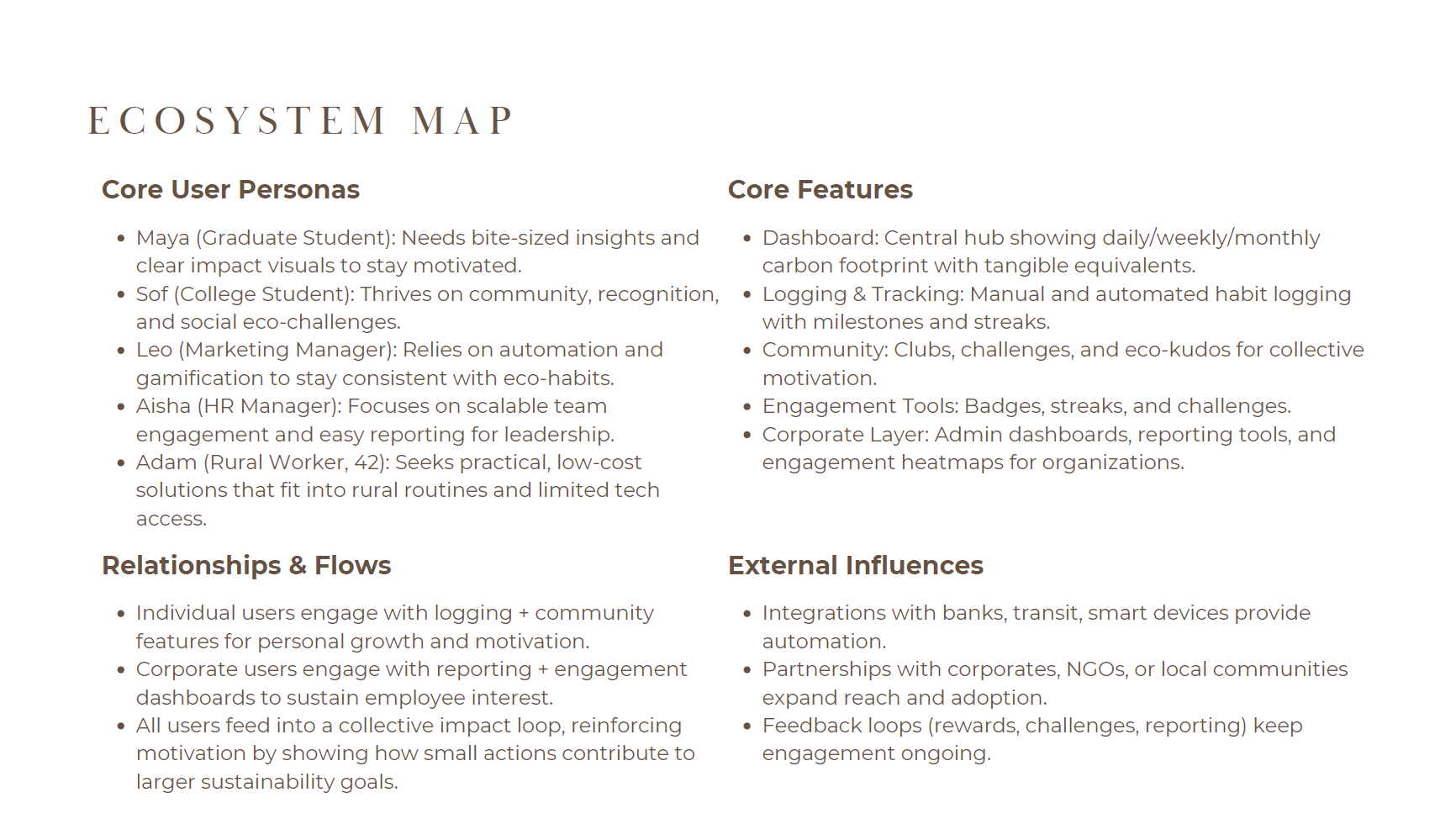
Wayleaf was designed as a human-centered sustainability system, balancing behavioral science, emotional motivation, and scalable data structures.
Wayleaf was built around a behavioral loop:
Habit → Log → Impact → Motivation
Core Pillars
Clarity
One daily tip, top 2–3 impactful habits
1
Motivation
Streaks, badges, and challenges
2
Visibility
Dashboards with real-world equivalents
3
Community
Clubs, feeds, and shared challenges
4
Scalability
Support for both individuals and organizations
5
Key Features
Carbon Dashboard
Daily, weekly, and monthly impact with real-world equivalents
Habit Tracking
Manual and automated logging with milestones
Smart Suggestions
Personalized eco-swaps based on past behavior
Gamification
Streaks, badges, leaderboards, and challenges
Community & Clubs
Social feed, eco-clubs, and team challenges
Organizations
Admin dashboards for group participation and reporting
Solution & Screens
The final solution transforms sustainability into a clear, motivating daily practice by combining habit tracking, impact visualization, and community engagement into a cohesive, user-centered experience.
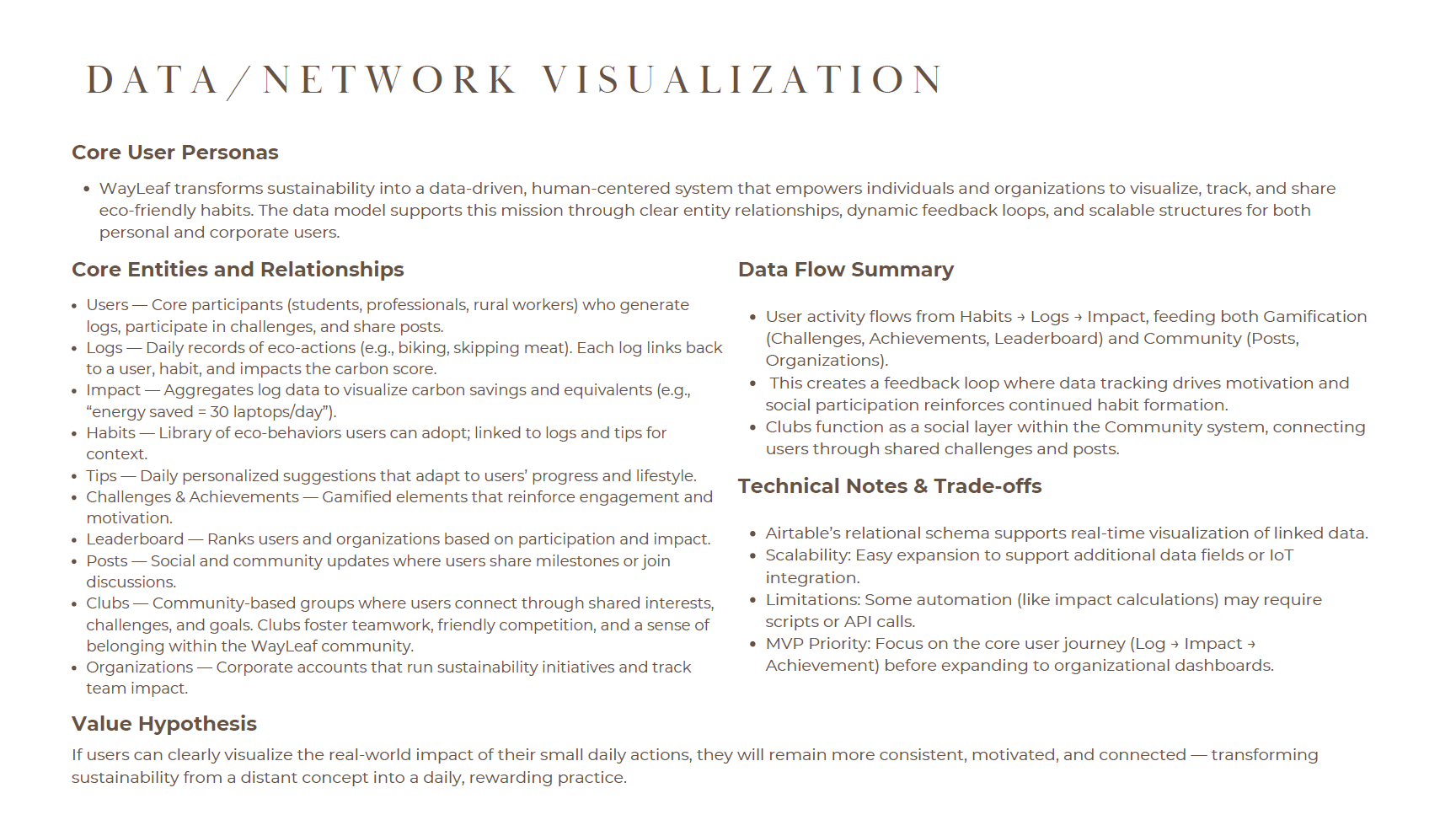
The data network illustrates how user actions, habits, and impact metrics connect to power a scalable and responsive sustainability system.
Calm, wellness-inspired visual language
Clear hierarchy and reduced cognitive load
Encouraging tone instead of guilt-based messaging
Mobile-first, responsive layouts
Final Solution
The final solution focuses on clarity, motivation, and emotional engagement, transforming sustainability into a daily, rewarding practice.
Dashboard
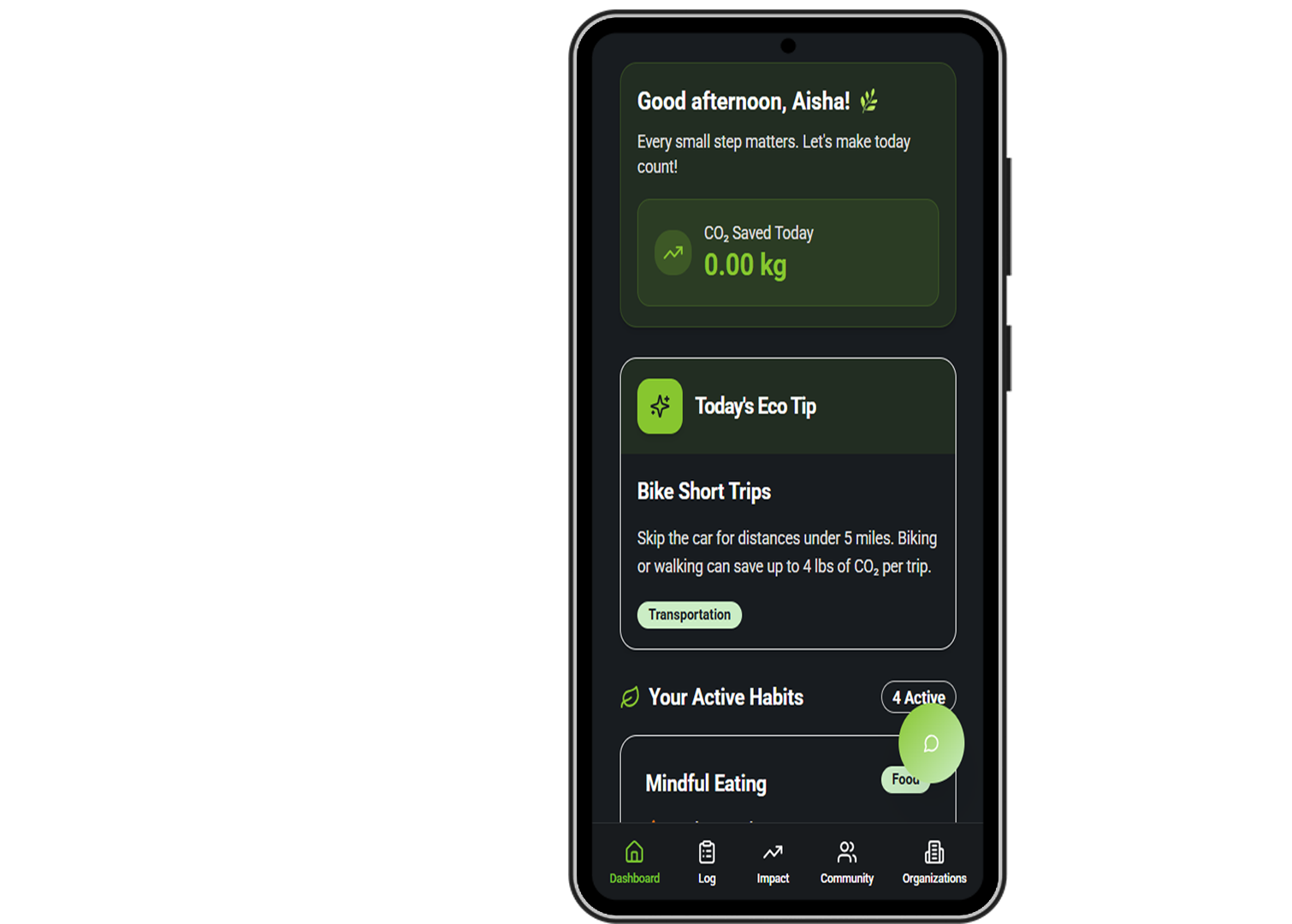
Quick Dash Overview
Daily, weekly, and monthly environmental impact
Real-world equivalents for better understanding
Clear progress tracking at a glance
Impact
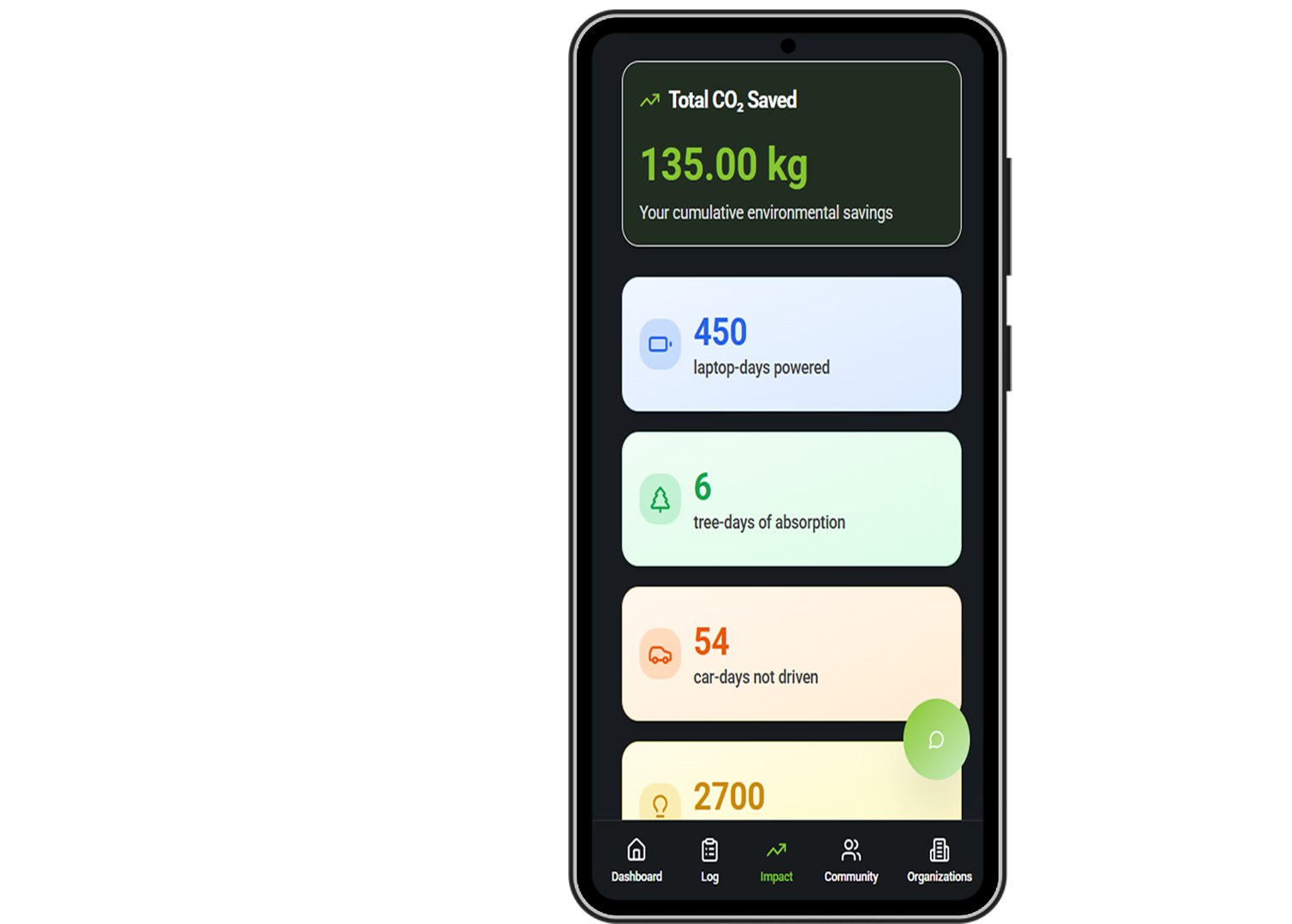
Real World Feedback
Translate carbon savings into relatable equivalents
Make abstract data feel tangible and meaningful
Reinforce motivation through visible progress
Habit Tracking
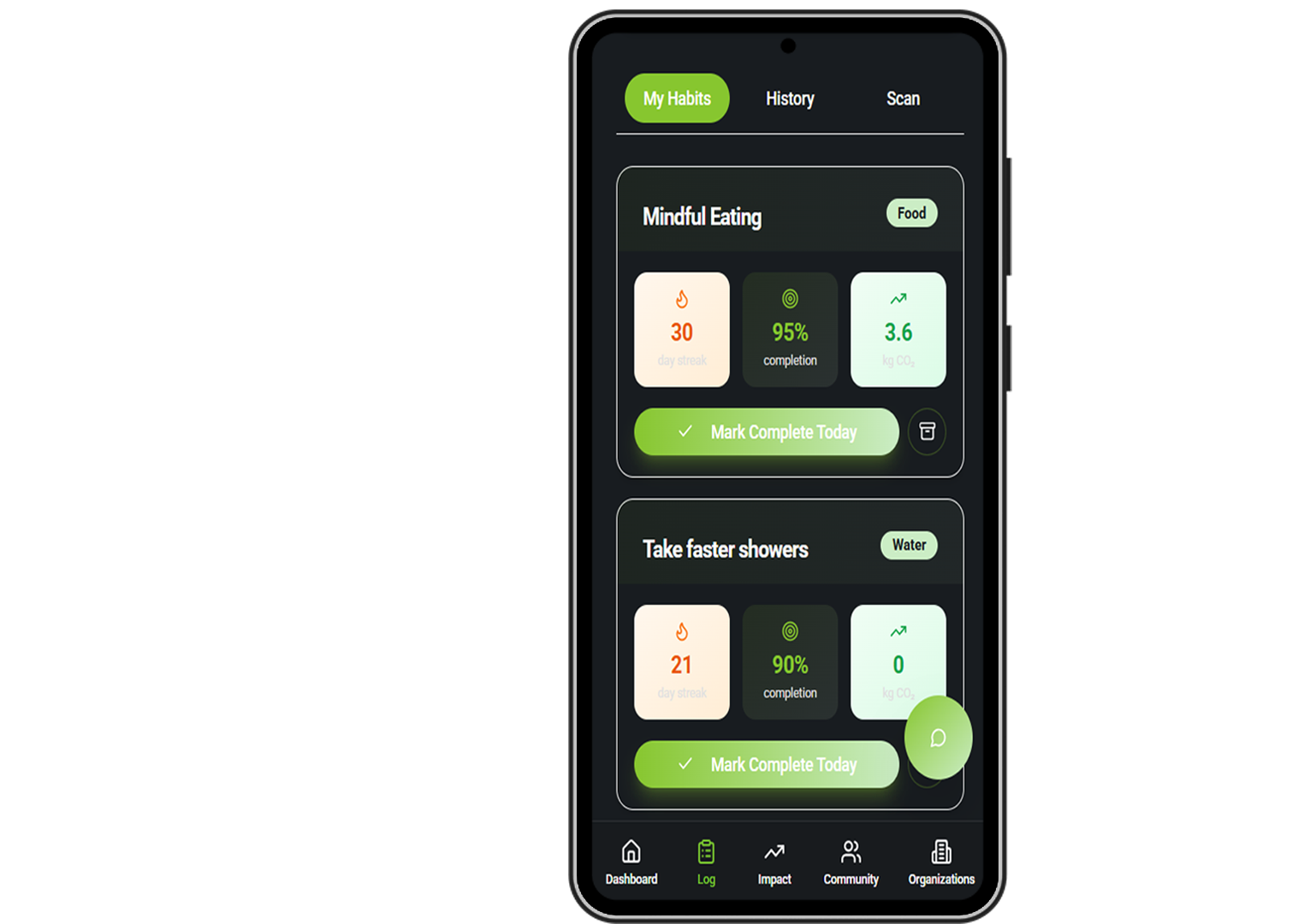
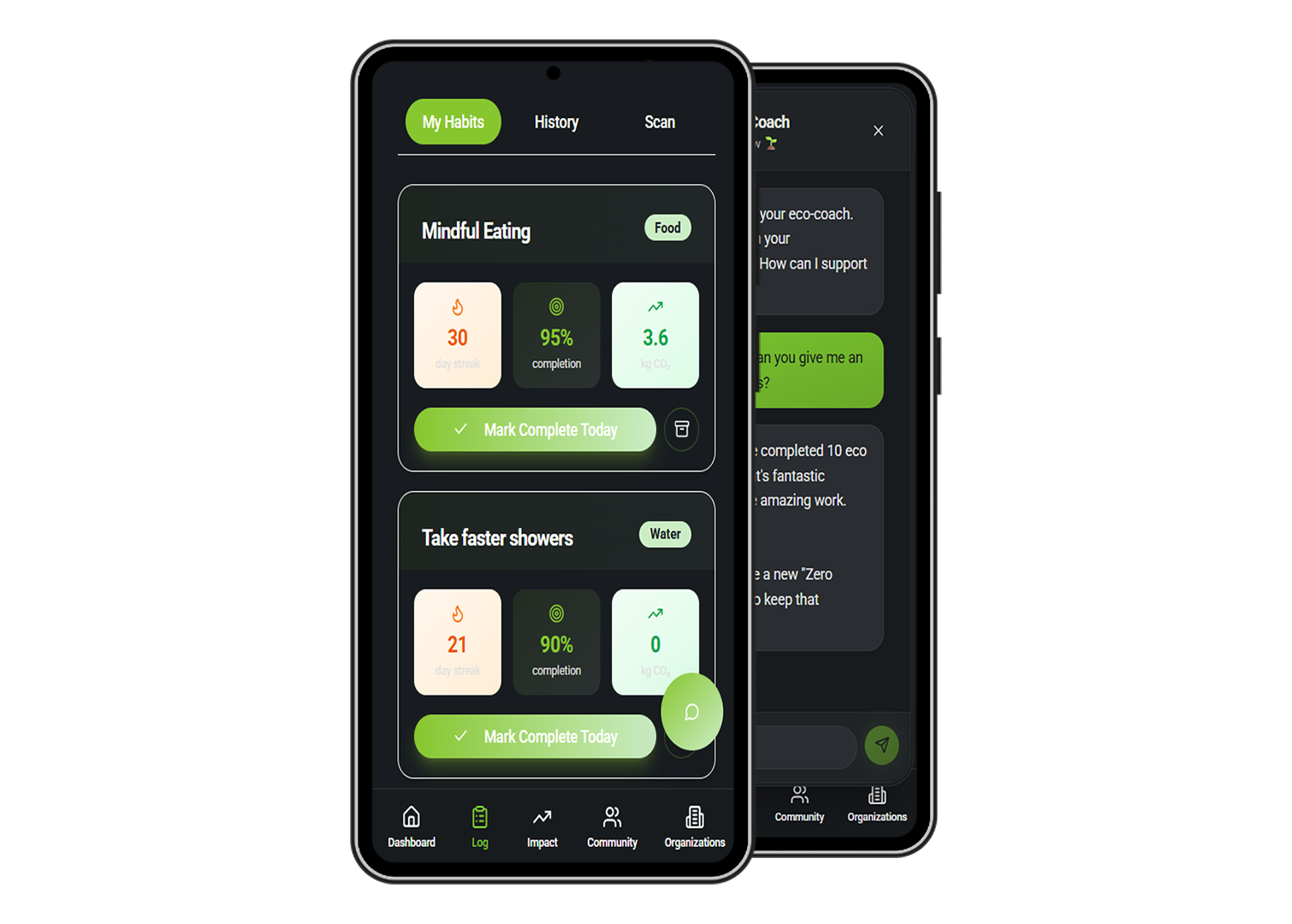
Habit Tracking
Log eco-friendly habits quickly and easily
View streaks and consistency over time
Receive milestone-based encouragement
Leaf AI Eco-Coach
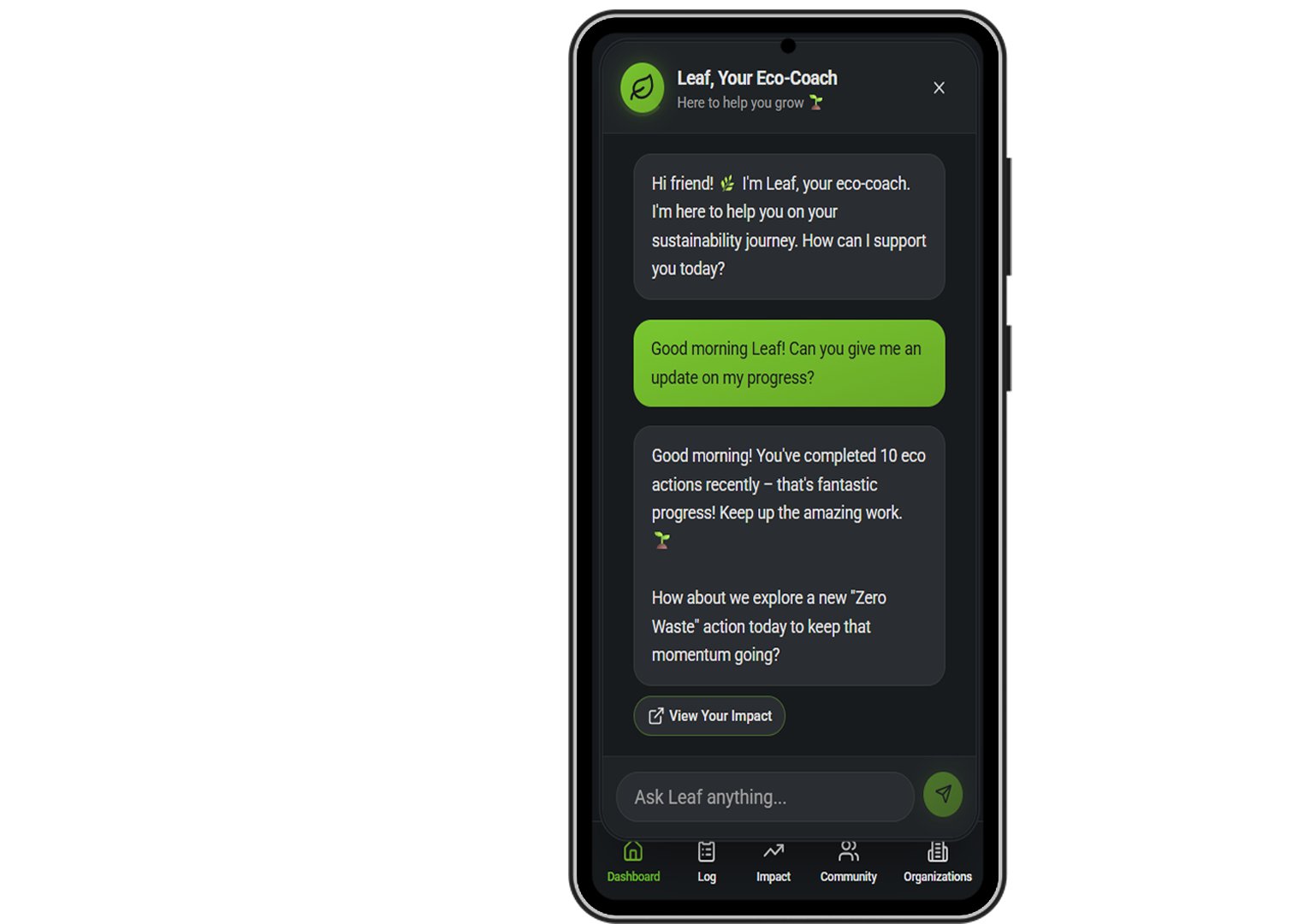
Personalized Guidance
Provides daily eco-tips and encouragement
Responds to user behavior and emotional cues
Supports reflection and long-term engagement
Usability Testing & Iteration
Wayleaf includes an AI-powered eco-coach, Leaf, designed to support reflection, motivation, and engagement.
Usability testing focused on evaluating clarity, motivation, and feature comprehension across key flows. Feedback revealed that users needed more immediate feedback on impact, clearer navigation between features, and stronger emotional reinforcement.
Iterations Included
Addition of CO₂ equivalency visuals for clearer impact understanding
Redesigned community and organization dashboards
Simplified navigation across dashboard and logging flows
Improved tone and responsiveness of the AI assistant, Leaf
Product Concept Video
Impact
Wayleaf demonstrates how sustainability can be reframed as a positive, wellness-oriented habit system. The project integrates UX design, data modeling, gamification, and AI to create an experience that supports long-term behavior change — without overwhelming users.
Reflection
This project strengthened my skills in systems thinking, data-informed design, and designing for emotional motivation. While the technical implementation presented challenges, it reinforced the importance of grounding complex systems in clear, human-centered experiences.
Future Opportunities
Live data integrations and automation
Expanded accessibility considerations
Deeper organizational analytics
Continued refinement of AI-driven coaching
View Full Process Book (PDF) Includes research artifacts, journey maps, ideation frameworks, and testing documentation.